


完美(中国)体育-中国医疗器械博览会|超声弹性成像:简史、临床价值与局限边界
2025-08-22
中国医疗器械展览会带您相识超声弹性成像:简史、临床价值与局限界限以下。
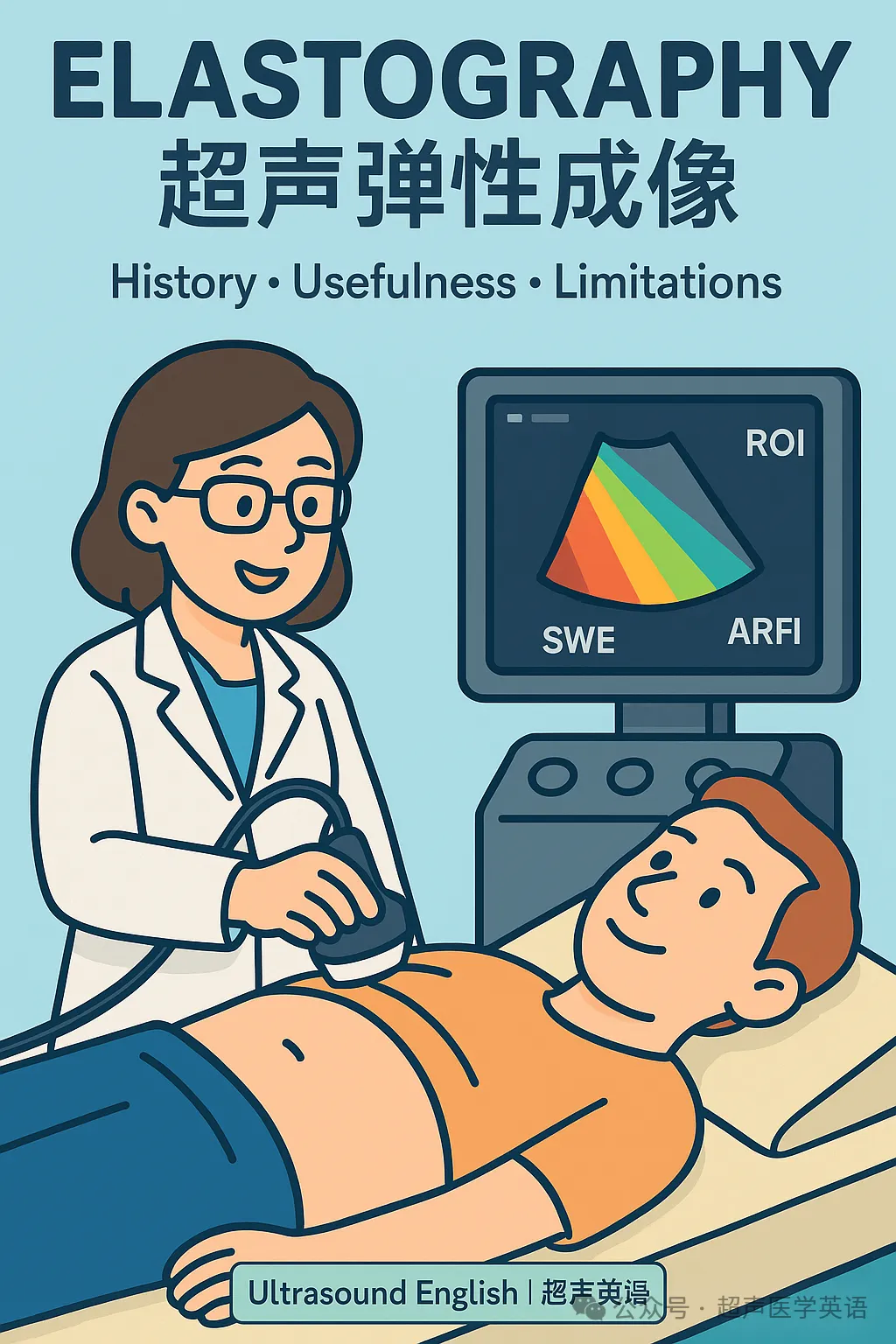
Ultrasound Elastography: A Brief History, Clinical Value, and LimitationsWhat it is and where it began.Elastography is an ultrasound technique that visualizes and quantifies tissue stiffness—an attribute tightly linked to pathology such as fibrosis, infla妹妹ation, and malignancy. The idea surfaced in the late 1980s and early 1990s: if a lesion feels “hard” under a surgeon’s fingers, could imaging capture that hardness objectively? Early strain elastography answered with qualitative color maps created by gentle compression from the probe or physiologic motion (heartbeat, respiration). These first-generation systems demonstrated feasibility but were operator-dependent and hard to standardize.
The quantitative turn.In the 2000s, two milestones changed clinical adoption: acoustic radiation force impulse (ARFI) and shear wave elastography (SWE). ARFI used focused ultrasound pushes to generate tiny tissue displacements, while SWE measured the shear wave velocity (SWV) that propagates through tissue; faster waves indicate stiffer tissue. Because SWV can be converted to kilopascals via elastic models, stiffness became a number rather than a color, enabling reproducible thresholds, multi-center studies, and guidelines.
Why it matters.The most transformative use is the non-invasive staging of liver fibrosis. Elastography reduces liver biopsy rates, helps screen for advanced fibrosis, and supports decisions about antiviral therapy and variceal risk. Beyond the liver, elastography adds value in breast (distinguishing benign from suspicious lesions), thyroid (risk stratification of nodules), prostate (target selection for biopsy), lymph nodes (reactive vs metastatic), and musculoskeletal applications (tendon, muscle, plantar fascia, and scar assessment). In oncology and interventional practice, stiffness mapping can guide biopsy, plan ablation margins, and monitor treatment response over time.
How to get reliable numbers.Quality hinges on good technique. Keep probe pressure minimal to avoid artificial stiffness; align the region of interest (ROI) away from large vessels and lesion edges; mind depth, because very deep targets attenuate waves; ask for breath-hold during liver measurements; and use the system’s quality map/indicator to accept only robust acquisitions. Report the median of multiple measurements, note the IQR/median ratio (as a reliability metric), and always integrate findings with B-mode and Doppler.
What can go wrong.Elastography has limitations. Results vary with vendor algorithms and presets; inter- and intra-observer variability remains an issue without training. Obesity, ascites, rib shadowing, or poor acoustic windows degrade shear waves. Precompression, anisotropy in tendons, and boundary effects near cysts or calcifications create artifacts. Stiffness is not diagnosis: infla妹妹ation, congestion, cholestasis, and post-prandial states can mimic fibrosis. For thyroid and breast, overlap exists between benign and malignant ranges, so elastography should complement, not replace cytology, histology, and risk scores.
Current best practices.Use validated cut-off values for specific organs and machines; document machine model, probe, depth, patient position, and whether the patient was fasting for liver exams. When following patients, try to keep the same vendor and preset. For research or multicenter audits, build prospective registries capturing stiffness, clinical context, and outcomes.
Where it’s going.Three trends stand out. First, multiparametric ultrasound—combining B-mode, Doppler, CEUS, and elastography—improves diagnostic confidence and procedural planning. Second, 3D/4D SWE and fusion imaging (US-CT/MR) offer volumetric stiffness maps and precise lesion registration for focal therapy. Third, AI assistance is emerging: automated ROI placement, artifact detection, and trajectory planning for needle paths could reduce variability and shorten learning curves. As standards harmonize and reference databases grow, elastography will move from “helpful add-on” to a routine quantitative vital sign for tissue.
Bottom line.Elastography converts a clinician’s fingertip impression into numbers you can track. When performed and interpreted well, it speeds decisions, reduces unnecessary biopsies, and monitors disease and therapy with minimal burden to patients. Use it thoughtfully—respecting artifacts, physiology, and clinical context—and it will earn a reliable seat in your day-to-day ultrasound toolkit.
Elastography Vocabulary 弹性成像是一种经由过程可视化与量化构造硬度来展现病理状况的超声技能。其理念于上世纪80—90年月萌芽:既然临床触诊能觉得肿块“发硬”,影像是否也能客不雅出现这类硬度?初期的应变弹性成像依靠探头轻压或者心跳、呼吸等天然位移,获得定性的彩色图,但受操作者影响年夜、尺度化不足。进入21世纪,声辐射力脉冲(ARFI)与剪切波弹性成像(SWE)奠基了临床化的基础。ARFI经由过程聚焦超声“推一下”构造,SWE丈量于构造中流传的剪切波速率;速率越快,构造越硬。借助弹性模子,速率可换算为千帕等单元,硬度从“颜色”变为“数字”,使阈值、研究与指南成为可能。
临床价值最凸起的是肝纤维化的无创分期:削减活检、评估晚期纤维化与静脉曲张危害,并引导抗病毒医治。除了此以外,弹性成像于乳腺(良恶性辨别)、甲状腺(结节分层)、前列腺(靶向活检选择)、淋逢迎(反映性vs转移)、以和肌骨体系(肌腱与瘢痕评估)均有孝敬。于肿瘤与参与场景中,硬度图有助在定位取材、计划溶解界限并随访疗效。
得到靠得住成果的要害是规范操作:连结最小探头压力,ROI避开年夜血管与病灶边沿;存眷深度与声窗;肝脏丈量要求屏气;仅接管体系显示高质量的波形;陈诉屡次丈量的中位数和IQR/中位数比。任何读数都必需联合B超与临床信息解读。
局限与陷阱:差别厂商算法与预设致使可比性受限;缺少培训时检者间与检者内差异较着。肥胖、腹水、肋骨声影会降低剪切波质量;预压、各向异性、界限效应可造成假硬度。硬度其实不等同诊断:炎症、充血、胆汁淤积、进食状况均可能“伪装纤维化”。于甲状腺与乳腺,良恶性硬度仍有堆叠,是以弹性成像应作为增补而非替换活检与其他成像。
成长趋向:其一,多参数超声将B超、血流、造影与弹性交融,晋升诊断与手术计划;其二,3D/4D SWE与交融成像带来体积硬度图与高精度配准;其三,AI正用在主动ROI、伪影辨认与穿刺路径计划,以降低变异、缩短进修曲线。跟着尺度同一与参考数据库扩展,弹性成像有望成为近似“生命体征”的构造硬度指标。
要点:只要尊敬物理与心理、留意伪影并联合临床,弹性成像就能削减没必要要的活检,加速决议计划,为患者带来更轻承担的诊断与随访。
图片来历:超声医学英语
中国医疗器械展览会 将在2025年9月24-26日于上海世博展览馆1 2号馆举办。现场会聚近1000家来自全世界近27个国度的优质品牌供给商,为中国医疗器械出产厂商提供产物研发、出产、注册所需的设计和软件办事、原质料、周详部件、主动化制造装备、超精加工技能、合同制造、测试及认证、政策法例及市场咨询办事,展品笼罩医疗器械设计与制造全财产链。预挂号已经开放,点击提早注册便可免费观光,立省百元门票费,现场注册需付费。
文章来历:超声医学英语
文章内容仅供常识交流分享利用,如涉侵权请接洽咱们删除了。
参展商咨询: Linc Cai 蔡锋 德律风:+86 21 6157 7217 邮箱:[email protected] 钻研会咨询: Rebecca Lv 德律风:+86-21 6157 7279 邮箱: [email protected] 观光咨询: Tracy Zhang 张昕 德律风:+86 10 6562 3307 邮箱: [email protected] 媒体和投稿接洽: Tracy Zhang 张昕 德律风:+86 10 6562 3307 邮箱:[email protected] -完美(中国)体育